
How it ships
Field to your dock
Cold chain, timing, and what it ships under.
Field to dock
Two of these windows are measured in hours.
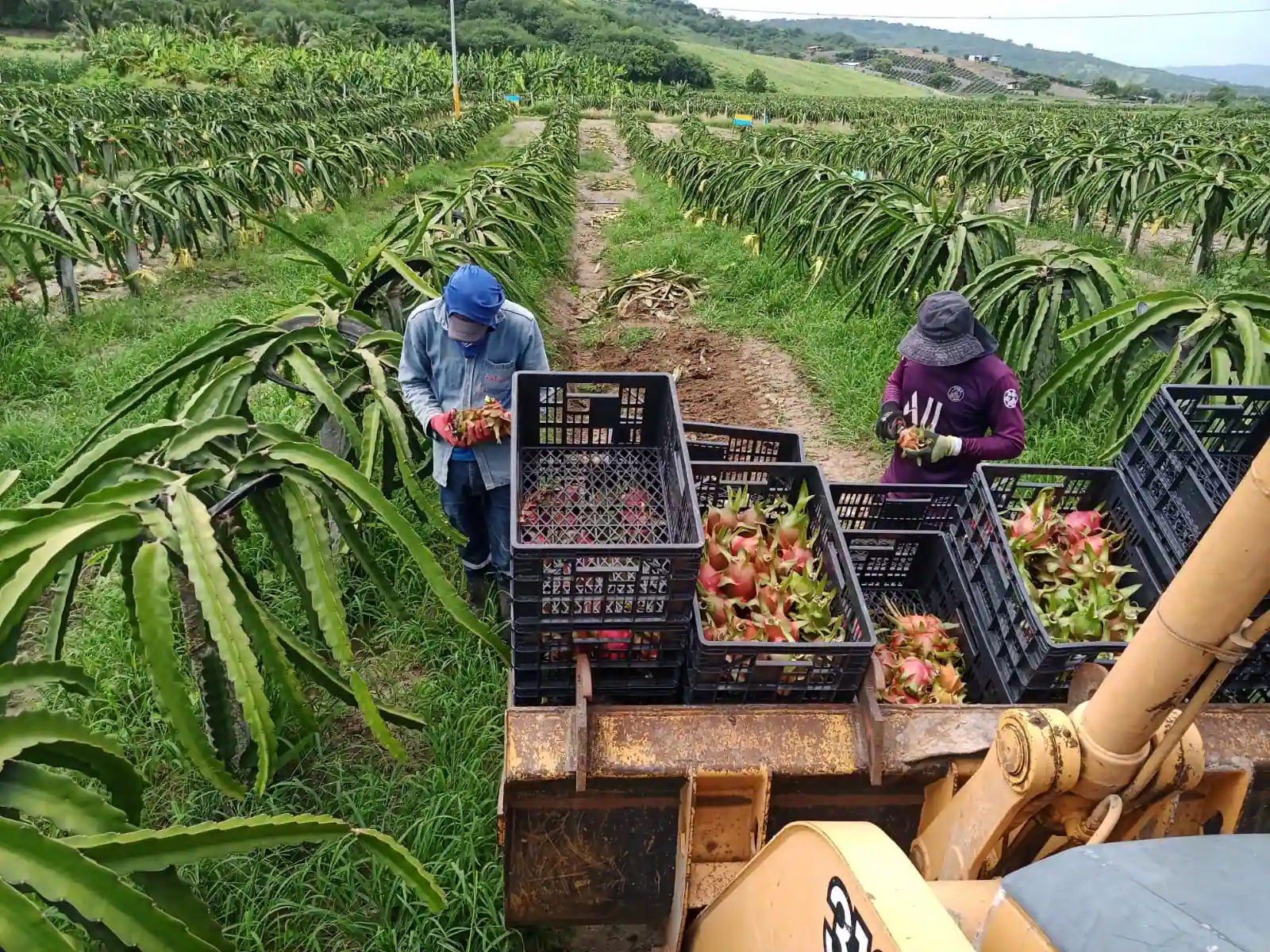
Everything after the cut is a race against the fruit, and the tightest window is set by federal rule rather than by us.
Cut to your color break
By handCut by hand to the skin color your route needs. Short run takes more color, long run takes less. Sugar stops climbing the moment it's cut, so this decides the Brix on arrival.
Graded and packed
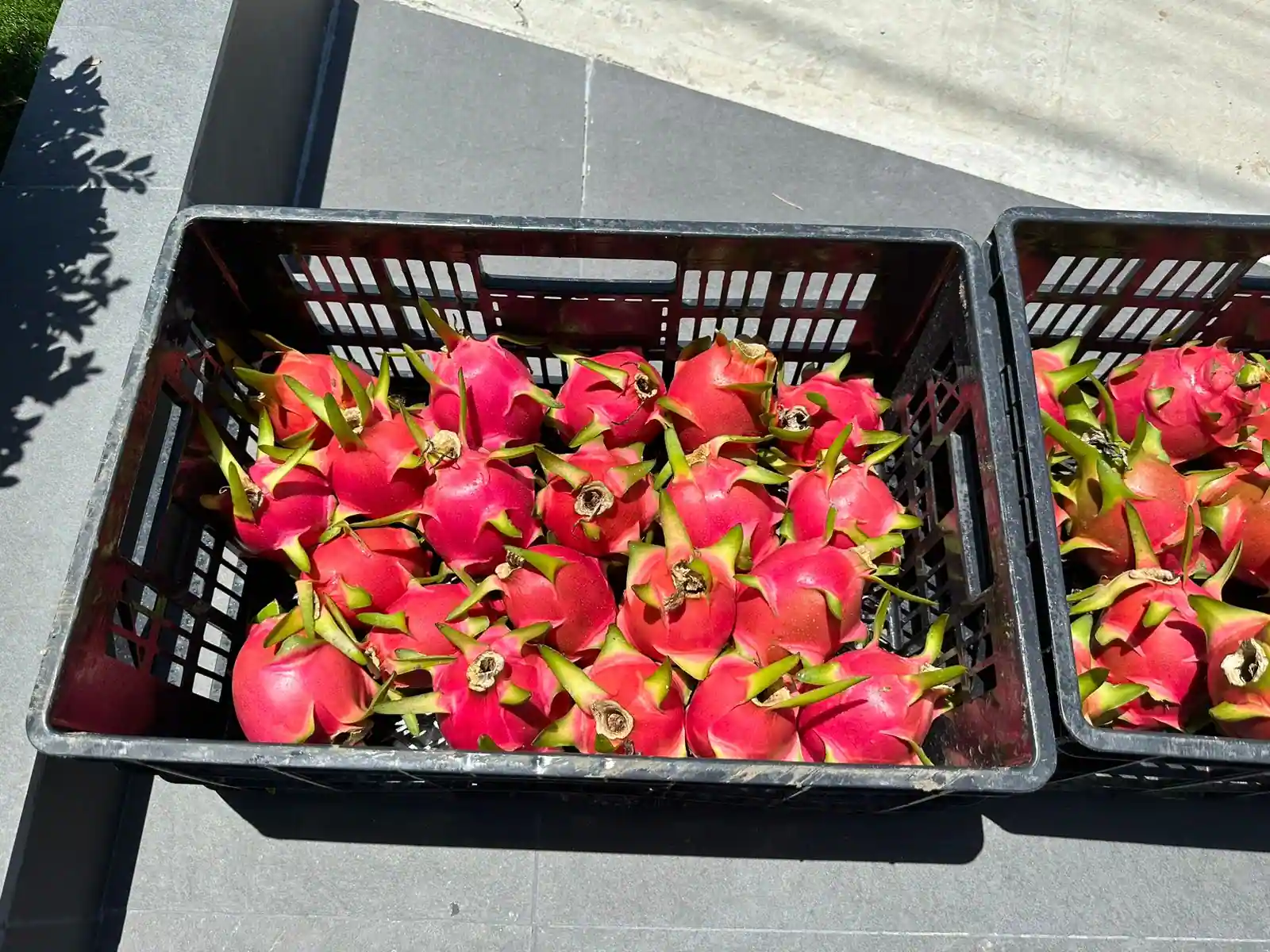
Within 24 hrsSorted by count and packed within 24 hours of cutting, in a registered insect-proof packhouse. Cartons marked so any pallet traces back to its block. Pallets built to your spec, so what lands is already sorted.
Into the cold
46–50 °FHeld at 46–50 °F in humid air — cold enough to hold, warm enough to avoid chilling injury. Temperature recorder travels with the load.
Shipped to South Florida
Air or seaMost Ecuadorian dragon fruit crosses by sea, roughly a week out of Guayaquil, which against a three-week cold shelf life is usually the sensible call. Air when a window is tight. We route it to suit your program.
Cleared and delivered
At entryInspected at the port of entry, phytosanitary certificate with every shipment. Then straight to your dock.
Working with us
Order at whatever size suits you.
Samples, single pallets, or a standing program. Orders book against a scheduled arrival — we confirm the date with your quote.
Samples
A carton to cut, taste, and leave on the shelf for a week to see how it holds.
Pallets
Packed to the carton, count, and grade you asked for. Reserved against the next arrival, so tell us early if you want a specific week.
Standing programs
Agreed volume across the season. We plan the picking against your order, which is when the cut date starts working for you.
What it ships under
Admissible to the continental US since 2017 on a systems approach rather than a treatment: production sites registered with Ecuador's plant health authority, fruit-fly trapping from a year before harvest, packing inside 24 hours in an insect-proof packhouse, and a phytosanitary certificate on every shipment.
Continental US only — not Hawaii, Puerto Rico, or the territories. Requirements are published in USDA APHIS's ACIR database.
Paperwork
Phytosanitary certificate travels with every shipment. Packing certificate, cut and pack dates, cold-chain logs, and certification status on request.
Tell us what you run.
Counts, volume, and where you are. We'll quote against your pack — and send samples if you want to see it first.